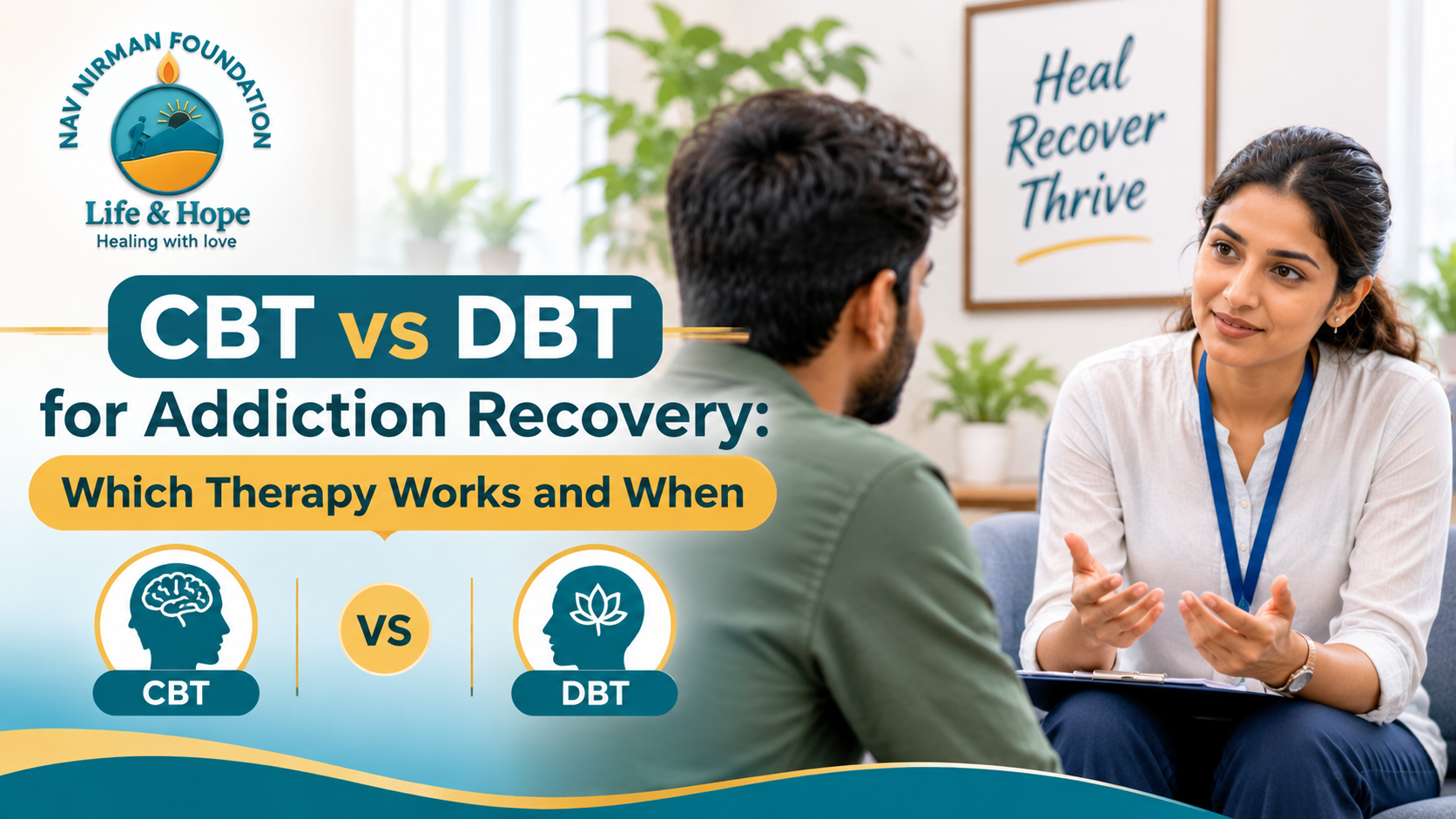
CBT and DBT are both proven talk therapies used in addiction recovery, but they work differently. CBT (Cognitive Behavioral Therapy) helps you spot and change the thoughts that drive drinking or drug use. DBT (Dialectical Behavior Therapy) focuses on managing intense emotions and distress without turning to substances. CBT suits most addiction cases; DBT is often better when strong emotions, self-harm, or trauma are involved. At Nav Nirman Foundation, we use both in our Mumbai programmes, matched to each person’s needs.
Key Takeaways
- CBT changes thoughts; DBT manages emotions — that’s the core difference.
- CBT is the first choice for most addiction cases, built around triggers and thinking patterns.
- DBT suits intense emotions, self-harm urges, or trauma alongside addiction.
- They work well together — many rehab programmes blend both.
- The right fit depends on the person, not on which therapy is “better.”
What is CBT (Cognitive Behavioral Therapy)?
CBT is a practical talk therapy that links your thoughts, feelings, and actions. The idea is simple: change the thought, and you can change the behaviour.
In addiction, CBT helps you spot the thinking that leads to use. For example, “I’ve had a hard day, I deserve a drink” is a thought CBT teaches you to catch and challenge.
A therapist works with you to:
- Identify your personal triggers and high-risk situations
- Recognise the automatic thoughts that follow
- Replace them with healthier responses
- Build coping skills to handle cravings
CBT is structured, goal-focused, and usually shorter-term. It’s backed by decades of research and is one of the most widely used therapies for addiction worldwide. Our CBT therapy in Mumbai uses this approach as a core part of treatment.
What is DBT (Dialectical Behavior Therapy)?
DBT grew out of CBT but adds a strong focus on emotions. It was first created to help people with intense, overwhelming feelings, and it works well for addiction too.
Many people use substances to cope with emotions they can’t handle. DBT teaches skills to manage those feelings directly, so the substance is no longer the escape.
DBT is built around four skill areas:
- Mindfulness — staying present instead of reacting on autopilot
- Distress tolerance — getting through a crisis without using
- Emotion regulation — understanding and calming strong feelings
- Interpersonal effectiveness — handling relationships and conflict better
DBT tends to be more intensive and longer than CBT. It often includes both individual sessions and skills groups. Our DBT therapy in Mumbai offers this for people who need deeper emotional support.
CBT vs DBT: side by side
Here’s how the two therapies compare at a glance.
| Feature | CBT | DBT |
| Main focus | Thoughts and behaviours | Emotions and distress |
| Best for | Triggers, cravings, thinking traps | Intense emotions, self-harm, trauma |
| Style | Structured, problem-solving | Skills-based, acceptance + change |
| Length | Usually shorter | Often longer, more intensive |
| Format | Mostly individual | Individual + skills groups |
| Core question | “What am I thinking?” | “How do I cope with this feeling?” |
Neither is “better.” They solve different problems. The right one depends on what’s driving the addiction.
When CBT works best
CBT is the right starting point for most people in addiction recovery. Consider it when:
- The addiction is driven by clear triggers, habits, or thinking patterns.
- You want a practical, structured programme with clear goals.
- Cravings and high-risk situations are the main challenge.
- There’s no major emotional instability or self-harm risk.
- You respond well to a logical, problem-solving approach.
For example, someone who drinks every evening out of habit and stress often does well with CBT. They learn to spot the trigger, challenge the thought, and build a new routine. It’s effective for both alcohol addiction treatment and drug addiction treatment.
When DBT works best
DBT is the stronger choice when emotions are at the centre of the problem. Consider it when:
- Substance use is a way to cope with overwhelming feelings.
- There are self-harm urges or a history of suicidal thoughts.
- Past trauma plays a major role in the addiction.
- Relationships are unstable and conflict triggers use.
- CBT alone hasn’t been enough in the past.
For example, someone who uses drugs to numb emotional pain or deal with trauma often needs DBT first. Learning to sit with hard feelings, instead of escaping them, is the real work. DBT also helps where addiction sits alongside a mental health condition, which our dual diagnosis treatment is built to address.
Can you use CBT and DBT together?
Yes, and often that’s the best approach. The two therapies are not rivals. They complement each other.
A common path is to start with DBT skills to build emotional stability, then use CBT to tackle the specific thoughts and triggers behind the addiction. One steadies the person; the other rewires the habit.
In a good rehab programme, a therapist assesses each person and blends the two as needed. The plan is tailored, not one-size-fits-all.
This combined approach is especially useful for complex cases, such as addiction with depression, anxiety, or trauma. Treating the mind and the emotions together gives the strongest protection against relapse. Ongoing mental health counselling keeps that support going after the main programme.
How therapy fits into a rehab programme
Therapy doesn’t work in isolation. It’s one part of a full recovery plan. Here’s where CBT and DBT usually fit.
- Detox first. The body is stabilised safely through a medically supervised detox programme before deep therapy begins.
- Assessment. A therapist works out whether CBT, DBT, or a blend suits the person.
- Core therapy. Individual and group sessions run through the residential stay.
- Family involvement. Loved ones join sessions to rebuild trust and support.
- Aftercare. Skills are reinforced after discharge to prevent relapse.
This is why choosing a full-service centre matters. You can explore structured programmes on our best rehab centre near Mumbai, where therapy, medical care, and aftercare come together in one plan.
FAQ
Q1. What’s the main difference between CBT and DBT?
CBT focuses on changing unhelpful thoughts and behaviours. DBT focuses on managing intense emotions and distress. DBT grew out of CBT and adds emotional and acceptance skills.
Q2. Which is better for addiction, CBT or DBT?
Neither is universally better. CBT suits most addiction cases driven by triggers and habits. DBT is better when strong emotions, trauma, or self-harm are involved.
Q3. Can CBT and DBT be used at the same time?
Yes. Many rehab programmes blend both, often using DBT to build emotional stability and CBT to address specific triggers and thoughts.
Q4. How long does CBT or DBT take to work?
CBT is often shorter, sometimes a few months. DBT is usually longer and more intensive. In rehab, both run through the residential stay and continue in aftercare.
Q5. Is DBT only for severe cases?
No, but it’s especially helpful for people with intense emotions, trauma, or co-occurring mental health conditions alongside addiction.
Q6. Does Nav Nirman Foundation offer both CBT and DBT?
Yes. We assess each person and use CBT, DBT, or a combination as part of a complete treatment plan in Mumbai.
Final thoughts
The CBT vs DBT question has no single winner. CBT reshapes the thinking behind addiction. DBT builds the emotional strength to cope without substances. The best choice depends entirely on the person.
The real goal is a plan that fits, often one that draws on both. A skilled therapist is the one to make that call after a proper assessment.
Nav Nirman Foundation uses both CBT and DBT in our Mumbai addiction programmes, matched to each person’s needs. Speak with our team to find the right approach for you or your loved one.