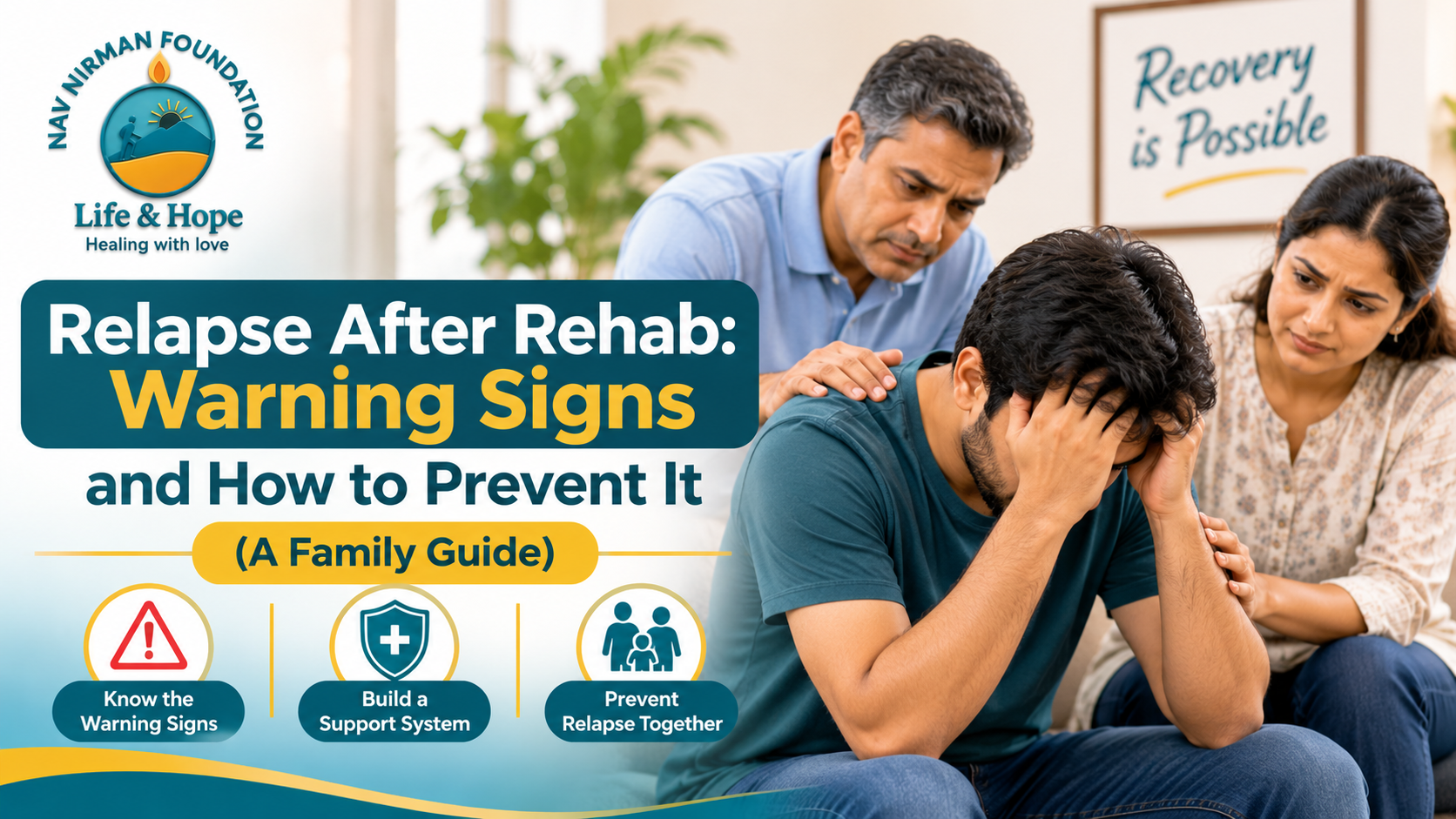
Relapse after rehab is common and, importantly, not a failure. Studies suggest 40 to 60 percent of people in addiction recovery relapse at least once, similar to other chronic conditions. Relapse usually builds in stages, starting with emotional and mental warning signs long before a person actually uses again. Families who learn these signs can step in early. This guide from Nav Nirman Foundation explains what to watch for, how to help, and what to do if relapse happens.
Key Takeaways
- Relapse is common, not failure — 40 to 60 percent relapse at least once, like other chronic illnesses.
- Relapse happens in stages — emotional, then mental, then physical — with early warning signs.
- Families who spot the signs early can help prevent a full relapse.
- Blame and panic make things worse — calm, steady support helps most.
- A relapse means the plan needs adjusting, not that recovery is over.
What is relapse, and why does it happen?
Relapse is a return to substance use after a period of being sober. It can be a one-time slip or a full return to old patterns.
Many families see relapse as a betrayal or a sign that treatment failed. That view is both painful and wrong. Addiction is a chronic condition, and relapse is part of its nature, just as it is with diabetes or high blood pressure.
Recovery is rarely a straight line. Most people who achieve lasting sobriety have faced setbacks along the way.
Why does it happen? The brain changes during addiction, and those changes take a long time to heal. Stress, triggers, and untreated emotional pain can reopen old pathways. This is why good aftercare matters so much. Recovery doesn’t end when a rehab programme finishes; it continues for life.
The three stages of relapse
Relapse is rarely a sudden event. It usually builds slowly through three stages, often over weeks. The earlier a family notices it, the easier it is to step in.
The key insight for families: by the time someone physically uses again, the relapse began long before. The emotional and mental stages are where you can step in.
Warning signs families can watch for
Each stage has signs you can notice if you know what to look for. Here’s a simple guide.
| Stage | What you might see |
| Emotional | Pulling away from family, poor sleep, mood swings, skipping meetings or therapy, bottling things up |
| Mental | Talking about past use fondly, reconnecting with old using friends, lying, planning situations where use is possible |
| Physical | Missing money, changes in appearance, secrecy, mood or energy shifts, finding substances or paraphernalia |
The emotional stage is the best time to act. The person may not even realise they’re heading toward relapse. A gentle, caring conversation here can change the path.
Common relapse triggers
Certain situations raise the risk of relapse. Knowing them helps the whole family stay alert.
- Stress — work pressure, money worries, or family conflict.
- Negative emotions — loneliness, boredom, anger, or sadness.
- People and places — old friends who still use, or bars and spots linked to past use.
- Celebrations — weddings, parties, and festivals where substances are present.
- Overconfidence — believing “just one” is safe now.
- Major life events — a job loss, breakup, or bereavement.
One helpful memory aid is HALT: Hungry, Angry, Lonely, Tired. These four states leave people most vulnerable, and they’re easy to check in on daily.
How families can help prevent relapse
Family support is one of the strongest protectors against relapse. Here’s what genuinely helps.
- Learn about addiction. Understanding it as an illness, not a choice, changes how you respond.
- Keep communication open. Let them talk without fear of judgment. Listening matters more than advice.
- Support their routine. Encourage therapy, meetings, exercise, and healthy sleep.
- Reduce triggers at home. Keep the home free of substances and calm where you can.
- Celebrate progress. Notice the good days and milestones, not just the setbacks.
- Look after yourself too. You can’t pour from an empty cup. Join a support group for families.
Structured family support works best when guided by professionals. Our family counselling for addiction helps families communicate, set boundaries, and heal together.
What not to do
Good intentions can backfire. These common reactions tend to push a person further away.
- Don’t blame or shame. Guilt fuels the cycle of use. It rarely motivates lasting change.
- Don’t police or interrogate. Constant checking breeds resentment and secrecy.
- Don’t enable. Covering debts, making excuses, or hiding use protects the addiction, not the person.
- Don’t give ultimatums you won’t keep. Empty threats lose all meaning fast.
- Don’t expect perfection. Recovery has ups and downs. One bad day is not a failure.
- Don’t ignore your own limits. Burning yourself out helps no one.
The balance is tricky: support without enabling, care without controlling. This is exactly where professional guidance helps families most.
What to do if relapse happens
If relapse does occur, stay calm. Panic and anger make things worse. A relapse is a signal that the recovery plan needs adjusting, not that everything is lost.
Here are the steps that help most:
- Ensure safety first. If there’s an overdose risk or medical danger, get emergency help immediately.
- Stay calm and non-judgmental. Let them know you’re there to help, not to punish.
- Reconnect with treatment fast. The sooner they return to support, the easier it is to recover ground.
- Review the triggers. Work out what led to the relapse so the plan can be strengthened.
- Consider a return to structured care. Sometimes a short stay or a fresh detox programme is the safest reset.
Many people relapse and go on to achieve lasting recovery. What matters is the response. Reaching out quickly to professional addiction treatment turns a setback into a step forward.
FAQ
Q1. Is relapse a sign that rehab failed?
No. Relapse is common in recovery, affecting 40 to 60 percent of people at least once. Like other chronic conditions, it means the plan needs adjusting, not that treatment failed.
Q2. What are the early warning signs of relapse?
The earliest signs are emotional: withdrawing from family, poor sleep, mood swings, and skipping therapy or support meetings, often before any thought of using returns.
Q3. How can family help prevent a relapse?
Learn about addiction, keep communication open and judgment-free, support healthy routines, reduce triggers at home, and seek professional family counselling.
Q4. What should I do right after a loved one relapses?
Stay calm, ensure their safety, avoid blame, and help them reconnect with treatment as quickly as possible. A fast response makes a big difference.
Q5. What is the HALT method?
HALT stands for Hungry, Angry, Lonely, Tired. These four states raise relapse risk, so checking in on them daily helps the person stay steady.
Q6. Does a relapse mean starting treatment from scratch?
Not always. Sometimes renewed counselling or a short detox is enough. The right level of care depends on how far the relapse went.
Final thoughts
Relapse is a hard part of the recovery journey, but it’s not the end of it. When families understand the stages and warning signs, they become one of the most powerful forces for lasting recovery.
Stay calm, stay informed, and stay connected. Support without controlling, and care for yourself along the way.
If your loved one is at risk of relapse or has already relapsed, help is available. Nav Nirman Foundation supports both patients and families through every stage of recovery near Mumbai. Reach out to our team for guidance and the next right step.