The Decision That Changes Everything
When a family reaches the point of searching for an alcohol rehabilitation centre near Mumbai, something has already shifted. Maybe it was a medical scare, a lost job, a conversation that broke down into silence. Whatever the moment was, the decision to seek professional help is not small. And yet the next step — actually choosing the right centre — can feel just as overwhelming as everything that came before it.
There are dozens of facilities across the Mumbai Metropolitan Region, each claiming to offer the best care, the most experienced team, and the highest success rates. So how do you cut through the noise and make a decision you can trust? This guide walks you through exactly what to look for, what questions to ask, and what red flags to avoid when comparing alcohol deaddiction centres near Mumbai.
The goal is not to overwhelm you with information. It is to give you a clear framework so that when you pick up the phone or visit a facility, you know what a genuine, clinically sound programme looks like — and you can tell the difference between that and one that only looks good on paper.
Start With Clinical Credentials, Not Just Facilities
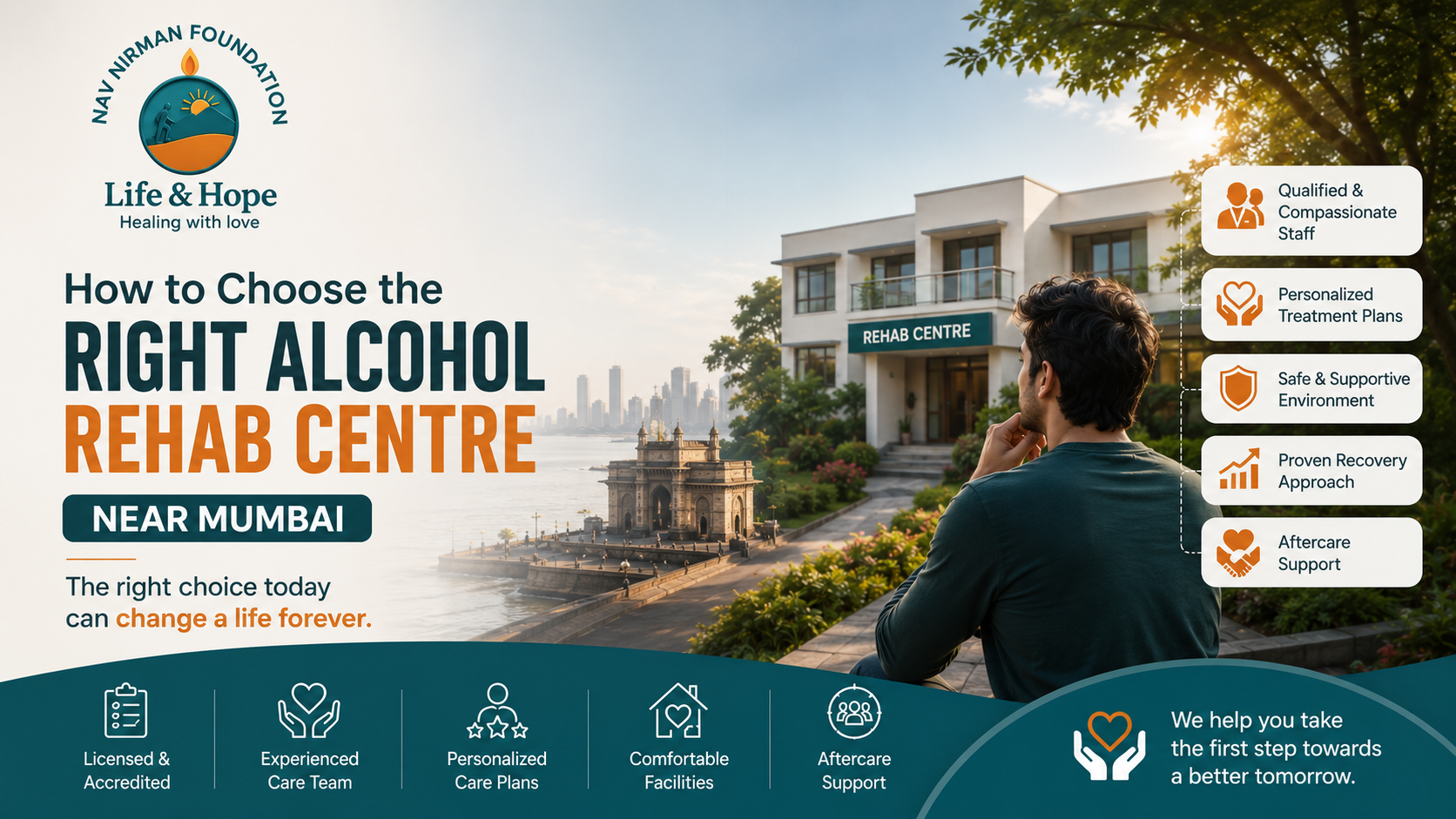
A beautiful campus does not guarantee effective treatment. The first thing to evaluate when comparing any alcohol rehab centre near Mumbai is the clinical team behind the programme. A reputable centre will have licensed psychiatrists, trained psychologists, certified addiction counsellors, and medically qualified nursing staff available around the clock during detox.
Ask directly: Who will be managing the detox phase? What qualifications do the therapists hold? Is there a psychiatrist on staff or only on call? These are not intrusive questions. Any credible facility will answer them without hesitation. If a centre is evasive about clinical credentials, that is a signal worth taking seriously.
The treatment approach also matters. Evidence-based therapies — Cognitive Behavioural Therapy (CBT), Dialectical Behaviour Therapy (DBT), motivational interviewing — have consistent clinical research behind them. Programmes built entirely on informal group support without structured therapeutic intervention are unlikely to produce durable outcomes, particularly for moderate to severe dependency cases.
For individuals who also carry mental health conditions alongside alcohol dependency, look specifically for centres that offer Dual Diagnosis Treatment Mumbai as part of their residential programme. Treating one condition while ignoring the other is one of the most common reasons for relapse after discharge.
Medically Supervised Detox Is Not Optional
One of the most dangerous misconceptions about alcohol recovery is that detox is straightforward. It is not. Alcohol withdrawal is one of the few substance withdrawal syndromes that can be medically life-threatening. Seizures, severe tremors, and a condition called delirium tremens (DTs) can develop within hours of the last drink in people with severe dependency.
Any alcohol rehabilitation centre near Mumbai that does not provide 24-hour medically supervised detox is not equipped to handle moderate or severe cases. Full stop. When you are comparing options, ask specifically how the detox phase is managed. Who monitors patients overnight? What protocols exist for managing seizures or severe withdrawal symptoms? How is medication managed during this period?
Centres that operate a strong Detox Program Mumbai will be specific and confident in their answers. Those that are vague should be approached with caution. Safe detox is the clinical foundation on which the rest of recovery is built — and shortcuts here carry real physical risk.
What a Real Therapeutic Programme Looks Like
Detox alone does not produce recovery. It clears the body of alcohol. But the patterns of thought, the emotional triggers, the unresolved pain, and the behavioural habits that drove the drinking in the first place — those require structured therapeutic work that happens after detox.
A credible residential programme for Addiction Treatment Alcohol will include individual counselling sessions with a qualified therapist, group therapy with other patients in recovery, psychoeducation workshops that help the individual understand the neurological and psychological dimensions of addiction, and skill-building sessions focused on relapse prevention.
Many quality programmes also integrate holistic elements including yoga, meditation, nutritional support, and physical activity. These are not replacements for clinical therapy — they are additions to it that support nervous system recovery, sleep quality, and emotional regulation. When these elements are combined thoughtfully, recovery becomes more than just abstinence. It becomes genuine rebuilding.
For women seeking gender-sensitive residential care, checking whether the facility has a dedicated women rehabilitation centre programme is also worth doing at the research stage.
The Questions That Matter Most Before Admission
Before committing to any residential facility, there are specific questions every family should ask. Here is a practical list:
- How long has this centre been operating, and how many patients have completed the programme?
- What is the patient-to-staff ratio during the residential period?
- Is the programme personalised based on clinical assessment, or is it the same structure for every patient?
- How is family involvement built into the programme?
- What does aftercare look like after discharge?
- Are there separate programmes for alcohol versus drug addiction?
That last point matters more than many families realise. Alcohol dependency and drug addiction often require different therapeutic emphases. A centre with a distinct Drug Addiction Treatment in Mumbai track alongside its alcohol programme is demonstrating clinical specificity — which is a good sign.
Family Involvement Is a Clinical Factor, Not a Courtesy
Research on addiction outcomes consistently shows that patients whose family members are actively involved in the recovery process perform better in the long term. This is not sentiment. It is clinical evidence.
The home environment that a person returns to after discharge has a direct effect on whether sobriety holds. When family members understand the nature of addiction, have been given tools to communicate without enabling, and have processed their own experiences through structured family counselling, the transition from residential care back to home life is significantly smoother.
When comparing alcohol rehab options near Mumbai, ask specifically how family members are incorporated. Are family sessions structured and facilitated by a professional therapist? Are there separate psychoeducation sessions for spouses, parents, or children? Is there a dedicated aftercare plan for the family unit, not just the individual?
Facilities that treat family involvement as an optional extra are missing a significant driver of sustained recovery. The rehab centre mumbai that produces reliable outcomes treats the family as part of the patient system — because it is.
Distance, Location, and Why Environment Matters
Many families instinctively want the rehab centre to be as close to home as possible. That feeling is understandable, but it is worth examining. Proximity to familiar triggers — certain streets, people, routines — can actively work against early recovery. Residential care that provides genuine physical separation from the daily environment tends to produce stronger initial stabilisation.
Facilities located in calmer, greener settings outside the urban core of Mumbai allow patients to disconnect from the stimulation of city life and focus on recovery without distraction. For families in Mumbai, centres in Thane district — accessible within 45 to 60 minutes — strike a practical balance. Close enough for regular family visits; far enough to provide real separation. Our detailed guide on what to expect throughout the Mumbai rehab recovery process covers the location question and many others in depth.
Understanding the Cost of Alcohol Rehabilitation Near Mumbai
Cost is a real consideration and it deserves honesty. Residential alcohol rehabilitation near Mumbai ranges considerably depending on the duration of the programme, the level of clinical care, and what is included in the package.
Short-term 30-day programmes for milder dependency will cost less than 60 or 90-day programmes for severe cases. Dual diagnosis programmes that incorporate psychiatric support carry additional clinical investment. In general, the question to ask is not just “how much does it cost?” but “what does that cost include?” A programme that seems cheaper but excludes structured therapy, family sessions, and aftercare may end up costing more through repeated treatment cycles.
Our resource on alcohol and drug rehabilitation costs and timelines provides a clear, practical breakdown to help families plan with realistic expectations.
Frequently Asked Questions About Alcohol Rehab Near Mumbai
Q1: What is the difference between detox and full alcohol rehabilitation?
Detox is the medically supervised process of clearing alcohol from the body and managing withdrawal symptoms safely. Full alcohol rehabilitation is what happens after detox — it includes individual and group therapy, relapse prevention training, family sessions, and aftercare planning. Detox alone is not rehabilitation. A genuine alcohol rehabilitation centre near Mumbai will offer both as a connected, structured programme rather than treating detox as the endpoint.
Q2: How long does alcohol rehabilitation take near Mumbai?
Duration depends on the severity of the dependency and any co-occurring conditions. Short-term residential programmes run for 30 days and are suited to mild to moderate dependency with strong home support. Moderate cases typically benefit from 45 to 60 days. Severe or recurring dependency, particularly where dual diagnosis is involved, generally requires 90 or more days of residential care. A clinical assessment at intake determines the appropriate duration.
Q3: Can someone with both alcohol dependency and a mental health condition get treatment at the same centre?
Yes, and they should. Co-occurring conditions such as depression, anxiety, or PTSD are extremely common alongside alcohol dependency, and treating only one while ignoring the other is one of the leading causes of relapse. Look specifically for centres offering a dual diagnosis programme that treats both conditions concurrently under the same clinical team.
Q4: Is alcohol withdrawal dangerous without medical supervision?
Yes, it can be. Alcohol withdrawal is one of the few substance withdrawal syndromes that carries genuine medical risk. Severe cases can involve seizures, tremors, and a life-threatening condition called delirium tremens. Anyone with a history of heavy, daily, or long-duration alcohol use should detox only under 24-hour medical supervision at a properly equipped facility.
Q5: How involved can family members be during residential alcohol rehab near Mumbai?
Family involvement is an essential part of effective alcohol rehabilitation, not an optional extra. At a quality centre, structured family therapy sessions run throughout the residential period. Family members receive psychoeducation, communication tools, and support to prepare for the patient’s return home. Regular scheduled visits are typically encouraged from the second week of residential care onward.
Taking the Next Step With Confidence
Choosing care for yourself or a loved one is one of the most important decisions a family makes. You deserve clear information, honest answers, and a centre that will be transparent about what its programme does and does not provide.
If you have questions about what to look for, or you are ready to begin the admissions process, get in touch with our team for a confidential conversation. There is no pressure. Just honest guidance from people who have been doing this work for a long time.
Call: +91 9833775447
Whats App: +91 9833775447
Email: help@navnirmanfoundation.com